Whole-house three-stage water filtration system installed by On Point Plumbing and Filtration in Moore County NC

Water Filtration & Well Water Treatment
in Moore County, NC

Rust stains, metallic taste, clogged filters, scale buildup, cloudy water, or falling pressure can each point to a different water problem. The right solution starts with testing the water — not guessing at equipment.

Lab-Grade Test in 60 Sec Licensed Plumber, Not a Salesman Systems Designed to Your Water Wells & City Water
Lab-Grade Water Testing, On Your Kitchen Counter, in 60 Seconds

Most companies test water with droppers and color-changing dyes — squint at a strip, compare it to a chart, hope the lighting's right. We use the LaMotte WaterLink Spin Touch: a photometric analyzer that spins a sealed disk of your water like a centrifuge and reads a full panel of results — iron, hardness, pH, copper, alkalinity, and more — in about one minute, while we're standing in your kitchen.

Phillip comes from a medical background, and this is the same idea as a blood panel: measure first, diagnose from real numbers, then design the treatment. You see your results on the spot, we explain what they mean in plain English, and every recommendation we make traces back to a number you watched appear — not a sales pitch.

Common Water Problems in the Sandhills

A huge share of Moore County homes are on wells — and Sandhills well water has patterns. Here's what the symptoms usually mean:

Orange or Rust Stains

Iron. It stains tubs and laundry, gives water a metallic taste, and clogs fixtures. Whether it's dissolved (clear from the tap, stains later) or already oxidized (orange from the tap) determines the right removal method — which is exactly why we test before recommending equipment.

Scale & Spots — Hard Water

Calcium and magnesium build scale inside water heaters, tankless units, and fixtures — shortening their lives and hiking energy bills. A properly sized water softener fixes it; an oversized one wastes salt and water. Sizing comes from the test numbers.

Cloudy Water & Clogging Filters

Sediment — sand, silt, and fine particles common in Sandhills wells. The fix is staged filtration sized to your particle load. If your current filter clogs every few weeks, it's usually the wrong stage doing the wrong job, not "dirty water you have to live with."

Blue-Green Stains — Acidic Water

Low-pH well water slowly dissolves copper pipe — showing up as blue-green staining and, eventually, pinhole leaks. An acid neutralizer protects the whole plumbing system. pH also decides whether iron treatment will even work, which is why we always measure it.

Rotten-Egg Smell

Sulfur odor — sometimes the water, sometimes just the water heater's anode reacting with it. Treating the wrong one wastes money, so we determine the source first, then treat it at the right point in the system.

Pressure Dropped After Adding a Filter

Filtration always adds some restriction — but a correctly designed system shouldn't make showers weak. Undersized housings and clogged, mis-sequenced stages are the usual culprits. Treatment order matters as much as the equipment itself.

Test → Diagnose → Design → Install → Verify

1

Test

Full on-site panel with the Spin Touch — iron, hardness, pH, and more — results in about a minute, with you watching.

2

Diagnose

We explain what the numbers mean for your home, your pipes, and your appliances — in plain English. Sometimes the answer is "your water's fine," and we'll tell you that too.

3

Design

Treatment is sequenced to your chemistry — sediment, neutralization, iron removal, softening, carbon — in the right order and the right sizes. No one-size-fits-all packages.

4

Install

Installed by a licensed plumber to a flat-rate price you approved before work began — with proper valving so future service is simple.

5

Verify

We retest after installation and show you the before-and-after numbers — proof the system does what we said it would. Then we remind you when filter changes are due.

Real Systems, Installed in Real Sandhills Homes

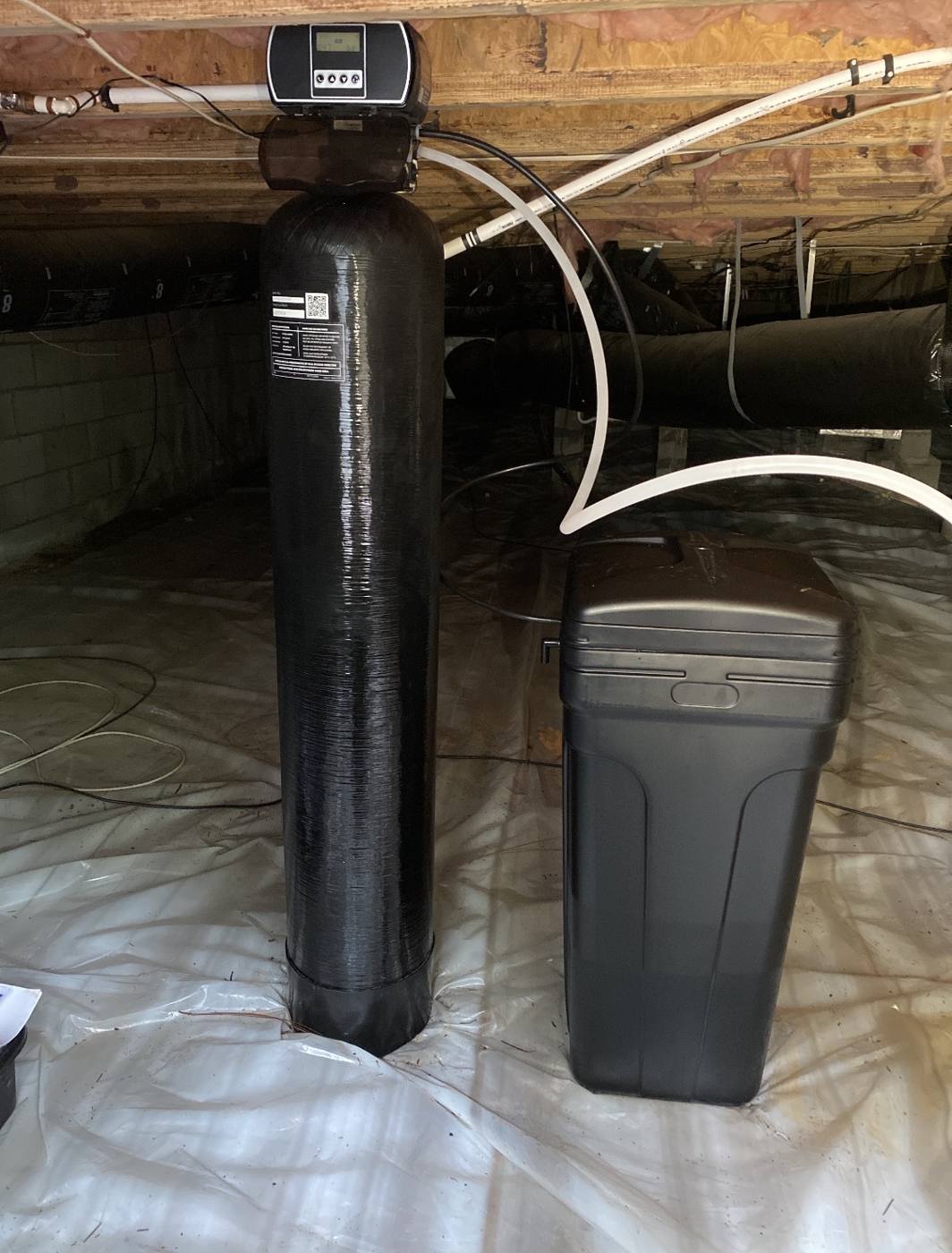
Iron filter and water softener system with brine tank installed in a Moore County crawlspace by On Point Plumbing

Iron Treatment + Softening

Well water system treating iron and hardness together — metered valve, sequenced media, clean crawlspace install on a moisture barrier.

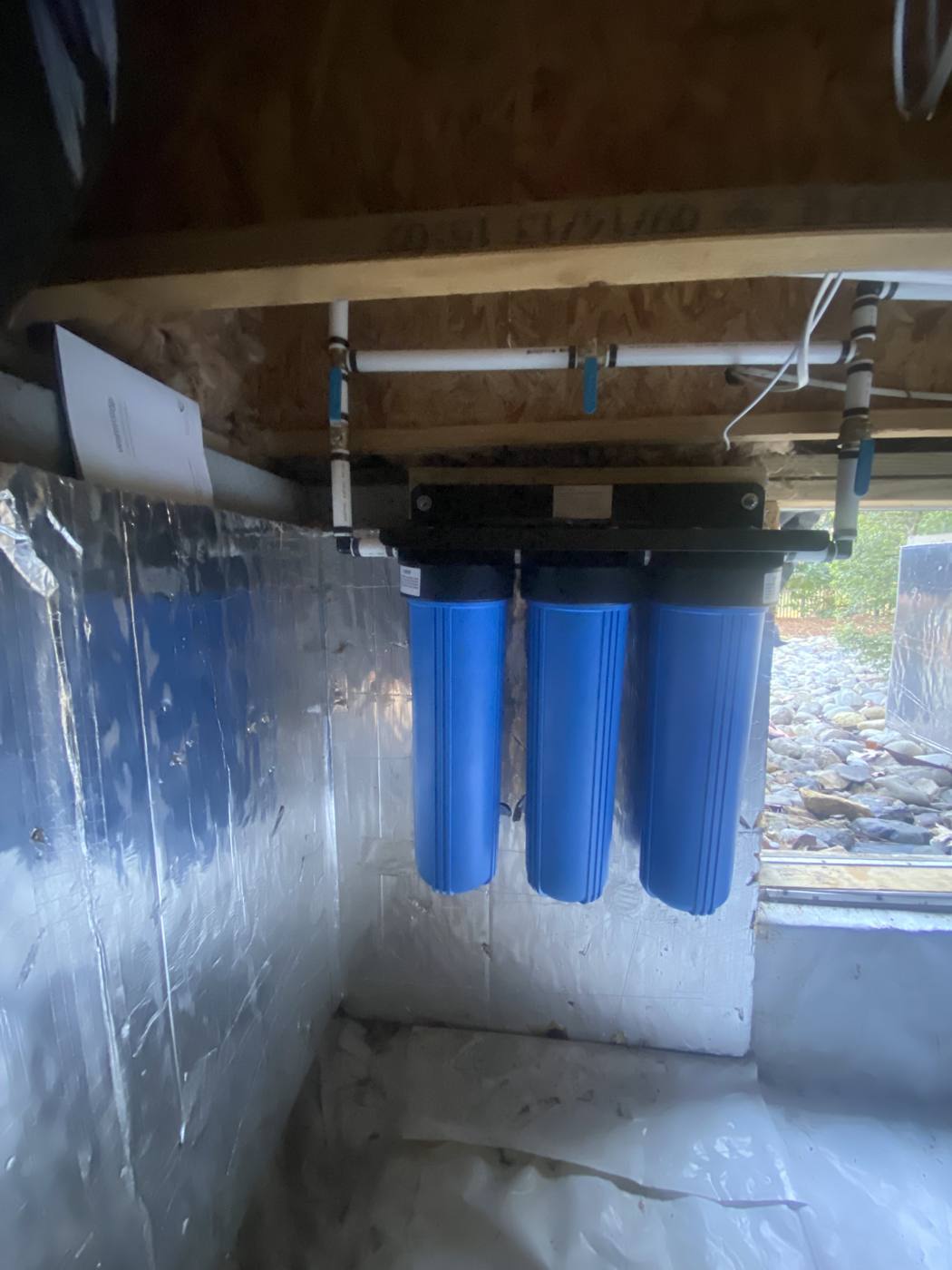
Three-stage whole-house sediment and carbon filtration system with isolation valves installed by On Point Plumbing

Three-Stage Whole-House Filtration

Staged sediment and carbon filtration with full isolation valving — so cartridge changes take minutes and never require shutting the whole house down.

Well Water & Filtration FAQ

Why is my well water orange?

Iron — extremely common in Sandhills wells. If it comes out of the tap orange, the iron is already oxidized and needs filtration; if it comes out clear but stains later, it's dissolved iron that needs to be oxidized before it can be filtered. The two problems need different equipment, which is why testing comes before buying anything.

Why does my sediment filter clog so quickly?

Usually because one filter is being asked to do a staged job — a single fine cartridge catching everything from sand to silt will plug fast. Proper sediment treatment steps down in stages (coarse to fine), so each stage catches what it's sized for and cartridges last months instead of weeks.

Can a water softener remove iron?

A softener can exchange small amounts of dissolved iron, but it's not designed for it — iron fouls softener resin over time and oxidized iron passes right through. If your test shows meaningful iron, dedicated iron treatment ahead of the softener protects the softener and actually solves the staining.

Why does pH matter for iron removal?

Most iron filtration works by oxidizing dissolved iron so it can be captured — and that chemistry works poorly in acidic water. If your pH is low, a neutralizer often has to come first or the iron system underperforms no matter how good it is. This is the single most common reason "the filter the last guy installed" never worked.

Do I need an iron filter, softener, neutralizer, or sediment filter?

Honestly: it depends entirely on your numbers, and anyone who answers without testing is guessing with your money. Some homes need one piece, some need a sequenced combination, and some need nothing at all. The test takes a minute and settles it.

Will filtration lower my water pressure?

A properly sized and sequenced system adds only minimal restriction you won't notice at the shower. Noticeable pressure loss almost always means undersized filter housings, clogged cartridges, or stages installed in the wrong order — all preventable with correct design, all fixable if a previous install got it wrong.

Get Your Water Tested

Tell us what you're seeing and Phillip will get you scheduled — full on-site panel, results explained in plain English, and an honest recommendation (even if that recommendation is "you don't need anything").

Prefer to talk it through? Call (910) 384-4460

Call Now — (910) 384-4460